Gutter Cleaning in San Antonio: What Clogs Fastest and How to Prevent Overflow
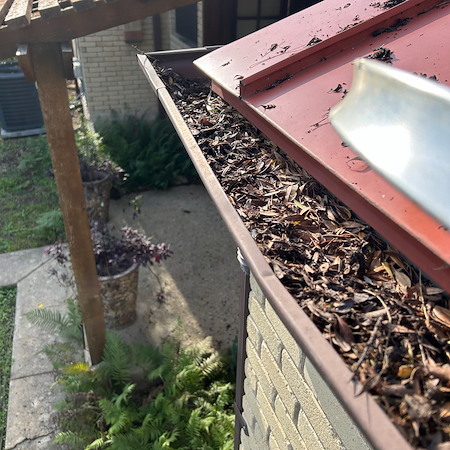
When heavy Texas rain hits, clean gutters keep water moving away from your home. In San Antonio, local trees and sudden storms can fill troughs and downspouts fast. If you are already seeing overflow, schedule professional gutter cleaning so water drains where it should and not into your fascia, siding, or soil around the slab.
Why Gutters Clog Fast in San Antonio
Our region has long growing seasons and bursts of wind that push debris onto roofs. Live oaks drop leaves and stringy catkins in late winter and spring. Pecan and cedar elm add broad leaves in fall. Asphalt shingles shed granules after big heat waves, which wash into the trough. Small twigs, seeds, and dust ride the gusts that sweep across the Hill Country and settle in low spots along the gutter run.
- Live oak leaves and catkins bunch up at inside corners and at the top of downspouts.
- Roof granules and grit build sediment beds that trap more debris.
- Pecan leaves, pine needles where present, and windblown seed pods wedge into seams.
- Bird nesting material and insects clog outlets, especially near tree canopies.
- Cottony fluff and fine dust form mats that hold water after storms.
Dense canopies in areas like Alamo Heights, Terrell Hills, Castle Hills, and Shavano Park mean more debris in spring and fall. Newer subdivisions with tall oaks, such as portions of Stone Oak and Helotes, also see fast buildup along long rooflines and steep pitches.
Top Signs Your Gutters Or Downspouts Are Clogged
Clogs show up in small ways first. Catching these early helps prevent bigger repairs later. Watch for these signals around the roofline, walls, and soil:
- Water spilling over the gutter edge during normal rain
- Dark drip lines on fascia or streaks down siding after storms
- Sagging sections or fasteners pulling away from the eave
- Puddles or channels cutting into flower beds along the foundation
- Plants or moss sprouting in the gutter trough
- Downspouts that gurgle, burp, or leak at seams
These are clear signs gutters are clogged. If you see two or more at once, the system is likely backed up along the trough and at the downspout elbow.
What Causes Downspout Issues In Our Area
Downspouts are the narrowest part of the system, so they fail first. In San Antonio, elbows trap oak catkins and leaf stems that slide past the outlet screen. Underground leaders can fill with sediment where clay soils settle. Splash blocks get knocked out of place during mowing and allow water to pool near the slab. Older bungalows in central neighborhoods sometimes have smaller outlets that cannot keep up with today’s roof surface area after additions.
Left alone, a partial clog becomes a full blockage. Water backs up under shingles, soaks the fascia, and drips behind the siding. **Overflow at corners is a red flag** because it often points to a jammed elbow just below the drop outlet.
Overflow Risks And Water Damage Prevention
Uncontrolled runoff is tough on a home. In many parts of Bexar County, soils expand and contract when they get too wet or too dry. That movement stresses foundations and can open hairline cracks. Constant spillover also stains stone and stucco, rots wood soffits, and wears away mulch and topsoil. **Pooling at the base of downspouts can invite pests and create slippery surfaces** on walkways after storms. Inside, moisture that creeps into the eave can feed mold and odors.
Good prevention starts with clear troughs and free-flowing downspouts, sized correctly for the roof and kept clear during the messy seasons. After clearing debris, rinsing the interior of the gutter helps reveal low spots, leaks at seams, and outlets that still drain slow.
Exterior care also supports drainage. A periodic rinse of siding, fascia, and soffits removes the grime that holds moisture. If your home’s exterior needs a refresh, pairing gutter work with residential pressure washing helps water sheet off surfaces instead of clinging and streaking.
How Often Should San Antonio Homes Schedule Gutter Cleaning
Frequency depends on trees, roof pitch, and storm patterns. Homes under live oaks often need service two times per year, with an extra visit after peak leaf and catkin drop. Open lots with fewer trees may be fine with a check in late spring and again in fall. After hail or a stretch of extreme heat, roof granules increase in the trough, so a follow-up inspection is smart even if the system looked clear earlier in the season.
If you plan updates to landscaping or add rain barrels, consider coordinating timing with your service so downspout outlets, diverters, and screens are tuned for the new setup. In all cases, the safest choice is to have a trained crew inspect height, pitch, hanger condition, and outlet sizing while they clear and flush the system.
How Pros Clean And Protect Your System
A professional crew focuses on safety, containment, and flow. They remove packed debris, bag and haul it away, and test each section with water. If they find slow drains, they clear elbows and use targeted rinsing or jetting to restore flow. Seams, end caps, and miters get a close look for leaks and loose fasteners. Where trees lean over the roofline, technicians may suggest guards that fit the gutter type and roof style and show how those options affect maintenance frequency. **Choosing licensed, insured professionals protects you and your property** while making sure the system is tuned to local weather.
If your home needs attention now, booking a gutter cleaning service with a local team ensures your downspouts are tested from top to bottom and water is carried safely away from the foundation.
Neighborhood Factors That Speed Up Clogs
Tree mix and roof shape vary across the city, and those details matter. In Alamo Heights and Terrell Hills, mature live oaks shed small leaves and tassels that slip through screens and collect at elbows. Shavano Park and Stone Oak see long roof runs where wind pushes debris to the far end, so the final outlet clogs first. Helotes and Leon Valley often deal with gusty storms that drop twigs and seed pods into inside corners. Live Oak, Converse, Universal City, and Schertz have a blend of broadleaf trees that load gutters heavily each fall. Wherever you live within a short drive of downtown, the quickest way to prevent trouble is simple: keep outlets clear before big rains and have the entire run checked after peak leaf drop.
How Clean Gutters Support Water Damage Prevention
Clear troughs and downspouts direct water away from fascia, windows, and doors. That protects paint, sealants, and the edges of your roof deck. It also reduces splashback on patios and walkways, which cuts mildew and grime. **Staying ahead of clogs protects curb appeal and helps your home shed water the way it was designed to do.** Pairing service with a brief exterior rinse keeps surfaces clean so runoff is smooth and predictable.
When Clean Gutters Help With Holiday Lighting
Clog-free, stable gutters make it easier to place light clips and reduce staining on fascia that could distract from your display. If you plan seasonal decor, tidy up before hanging lights so water does not overflow onto cords during December storms. For help with placement and safe attachment, explore holiday lighting services after your fall cleaning.
Choosing A Local Team You Can Trust
Bright Choice serves homeowners who want reliable results and clear communication. Crews are trained to respect landscaping, protect siding and windows, and confirm flow at every outlet before they leave. If you are comparing providers, start with gutter cleaning san antonio experience, ask about safety procedures, and look for companies that test downspouts with water so you know they are clear, not just scooped.
When you call, share any concerns you have noticed, such as overflow at a specific corner or puddles forming on one side of the home. That detail helps the crew focus on the right sections first and check for hanger adjustments or outlet resizing that could improve performance.
Ready To Protect Your Home Before The Next Storm
San Antonio rain can turn a small clog into a big problem fast. Keep runoff controlled and your foundation guarded by scheduling with Bright Choice today. Call 210-706-0075 to set your visit, or book a convenient time through our gutter cleaning in san antonio page. Your home will be ready when the clouds roll in.
Restore Your San Antonio Home's Curb Appeal with Professional Pressure Washing